The Evolution of Cannabis Connoisseurship in Australia: From Illicit Markets to Legal Access Pathways
This article maps the historical trajectory of cannabis connoisseurship in Australia, detailing its transition from clandestine origins to its contemporary form within evolving legal structures.
The Australian relationship with cannabis has undergone a profound metamorphosis, shifting from a clandestine commodity exchanged in hidden corners to a regulated substance accessible through established medical pathways. This evolution has not merely altered the legal framework but has fundamentally reshaped the expectations and discernment of cannabis consumers. What was once a culture driven by availability and potency, often with limited information, is now progressively influenced by a growing appreciation for nuanced characteristics like cannabinoid profiles, terpene expressions, and cultivation integrity, mirroring a global trend towards sophisticated connoisseurship. This journey from an underground, unregulated market to a burgeoning, medically supervised industry has fostered a new generation of consumers, patients, initially, who are increasingly educated, empowered, and demanding of quality, transparency, and consistency in their cannabis products.
The Deep Roots of Illicit Supply
For decades, the Australian cannabis market operated almost entirely underground, a shadow economy driven by necessity and risk. Supply chains were informal, often relying on small-scale domestic grows or illicit imports, making quality control a non-existent concept. Information about the product itself was largely anecdotal, passed down through word-of-mouth or based on crude observations. Consumers often purchased cannabis based on visual cues, the colour, density, or presence of seeds, general reputation of a dealer or a specific batch, or simply what was available in their immediate vicinity. There was little to no insight into its genetic lineage, the specific cultivation methods employed, or its precise chemical composition. This environment fostered a culture where potency, often broadly described as “strong” or “weak,” “heady” or “body,” was the primary, if not sole, metric of perceived quality. The terms “bush weed” or “hydro” became common descriptors, offering a rudimentary, often misleading, categorisation.
The illicit nature of the market also meant that strain identification was frequently unreliable, a chaotic landscape of invented names, recycled monikers, and regional slang. A strain known as “Northern Lights” in one state might bear no resemblance to another in a different region, or simply be a generic term for any potent indica-dominant variety. The focus was overwhelmingly on the psychoactive effect, the “high”, with considerably less emphasis on the subtle aromatic or flavour profiles that are now central to connoisseur discussions. The concept of “terpenes” was virtually unknown outside of scientific circles, and the interplay between cannabinoids was a mystery. This period laid the groundwork for a consumer base that, while experienced in consumption, often lacked the vocabulary or access to information to articulate more refined preferences beyond basic effects. The consumer experience was largely a gamble, with each purchase a leap of faith into an unknown product, shaped by the risks inherent in an unregulated market.
Emergence of Medical Pathways and the Rise of the Educated Patient
The legalisation of medicinal cannabis in Australia, beginning in 2016, has been a pivotal force in transforming consumer understanding and expectations. This monumental shift introduced a paradigm of regulation, transparency, and clinical oversight. With strict guidelines governed by the Therapeutic Goods Administration (TGA), products dispensed through pharmacies under the Special Access Scheme (SAS) or Authorised Prescriber (AP) pathways come with an unprecedented level of detailed information. For the first time, patients receive verified cannabinoid percentages (THC, CBD, and often minor cannabinoids like CBG or CBN), comprehensive terpene profiles, and rigorous testing for contaminants such as pesticides, heavy metals, and microbial impurities. This granular transparency represents a radical departure from the opaque, often dangerous, nature of illicit markets, where purity and precise composition were always in question.
Patients engaging with medicinal cannabis are increasingly educated by healthcare professionals, doctors, pharmacists, and nurses, who provide guidance on product selection and usage. Furthermore, the detailed product information leaflets (PILs) and online resources from licensed producers empower patients to become active participants in their treatment. They learn to associate specific cannabinoid ratios, for example, a 1:1 THC:CBD ratio for balanced effects, or a high-CBD strain for anxiety without significant psychoactivity, and particular terpene combinations, such as myrcene for sedation or limonene for mood elevation, with desired therapeutic outcomes or sensory experiences. This direct access to verified, scientific data empowers consumers to make informed choices, fostering a deeper appreciation for the complex pharmacology and phytochemical diversity of the plant. The availability of diverse, quality-controlled products has, in turn, elevated the discourse around cannabis quality, moving it beyond mere potency to a holistic understanding of the plant’s therapeutic and experiential potential.
“The shift from illicit to regulated supply has transformed cannabis from an anonymous commodity into a product with a traceable lineage and verifiable chemical profile, fundamentally altering consumer discernment. This foundational change has not only improved safety but has cultivated a generation of highly informed and demanding cannabis users.”

Terpenes and the Drive for Craft Cultivation
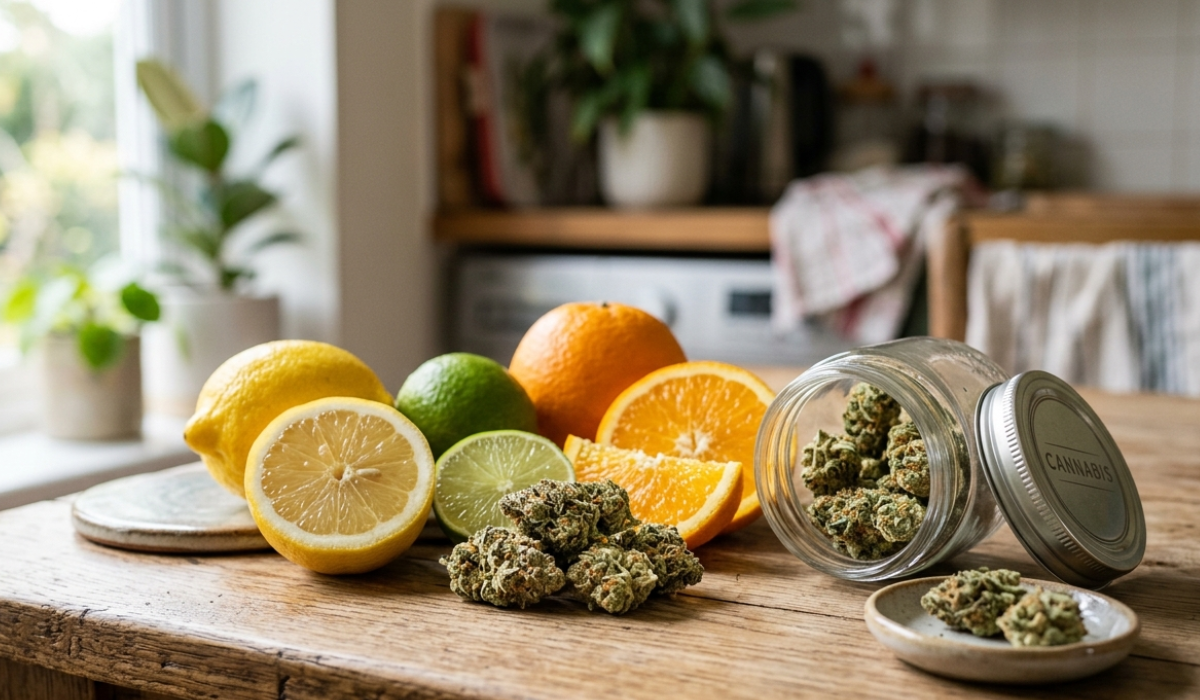
As access to legal cannabis expands, albeit predominantly within a medical framework, there’s a discernible and accelerating trend towards appreciating the nuances far beyond basic potency. Terpenes, the aromatic compounds found in cannabis, are gaining significant recognition for their profound contribution to both flavour and effect, often dictating the overall experience. Consumers are moving beyond generic strain categories like “Indica” or “Sativa,” which are increasingly understood as oversimplifications, seeking out specific terpene-dominant profiles. Whether it’s the uplifting, citrus notes of limonene, often found in strains like Super Lemon Haze; the earthy, sedative undertones of myrcene, characteristic of OG Kush; the spicy, peppery kick of caryophyllene, prevalent in strains such as GSC (Girl Scout Cookies), known for its anti-inflammatory properties; or the piney freshness of pinene, consumers are actively seeking these specific profiles to tailor their experience. This understanding reflects a paradigm shift, where the “entourage effect”, the synergistic interaction between cannabinoids, terpenes, and other compounds, is no longer just a scientific theory but a tangible aspect of product selection.
This growing interest in terpenes is intrinsically linked to the concept of “craft” cultivation. While hobby cultivation for personal use is not legally permitted across Australia (with limited exceptions in the ACT), the principles of craft, meticulous attention to detail, sustainable and organic growing practices, specific pheno-hunting to identify and preserve desirable plant characteristics, and optimal curing and drying techniques, are becoming aspirational benchmarks for patients and producers alike. Consumers of legally available products are increasingly discerning about cultivation standards, preferring products that demonstrate care and expertise in their production. This includes a focus on optimal nutrient regimens, appropriate lighting, pest management without harsh chemicals, and precise environmental control. These factors directly contribute to superior terpene expression, ensuring the full aromatic and therapeutic potential of the plant is realised, leading to enhanced overall product integrity, flavour, and efficacy. The demand for transparency extends to cultivation practices, with patients wanting to know how their medicine is grown.
Product Craft and Innovation
The regulated medical market has also spurred an incredible wave of innovation in product craft, moving far beyond the traditional dried flower. Australian patients now have access to a diverse and sophisticated range of product formats, each designed to meet specific needs and preferences. This includes precisely formulated cannabis oils, available in various concentrations of THC, CBD, or balanced ratios; discreet and accurately dosed capsules; and advanced vaporiser cartridges containing full-spectrum extracts or distillates. Each format requires specific manufacturing processes that profoundly impact the overall consumer experience. The quality of extraction methods, CO2, ethanol, or hydrocarbon, the purity of carrier oils such like MCT or olive oil, and the precision of dosing mechanisms are all critical factors that contribute to the perceived “craftsmanship” and efficacy of a product. For instance, a poorly extracted oil might contain residual solvents or lack the full spectrum of beneficial compounds, diminishing its therapeutic value and taste.
This expansion of product types demands a more sophisticated understanding from consumers. They are learning to differentiate between full-spectrum extracts, which retain a wide array of cannabinoids, terpenes, and other plant compounds to maximise the entourage effect; broad-spectrum extracts, which remove THC but keep other beneficial compounds; and isolates, which are pure cannabinoids like CBD isolate. Understanding how these different preparations can influence the “entourage effect” and tailor their therapeutic outcomes is becoming commonplace. Furthermore, the meticulous attention to packaging, the clarity and comprehensiveness of labelling, and the consistency of products from licensed cultivators and manufacturers contribute significantly to a sense of reliability and quality that was largely absent in the illicit era. These elements build trust and allow patients to consistently achieve desired results, fostering a deeper connection to their medicine and the industry providing it.
“Connoisseurship in Australia is moving beyond simple potency, embracing detailed knowledge of terpene profiles, cultivation methods, and the integrity of product manufacturing. This holistic approach signals a maturing market driven by quality and informed choice.”

The Future of Australian Cannabis Connoisseurship
The trajectory of cannabis connoisseurship in Australia is undeniably one of increasing sophistication, education, and discerning palates. While the recreational market remains largely restricted, the medical pathways have inadvertently created a highly informed and discerning consumer base. This demographic, primarily patients, is no longer content with merely “getting high” or finding relief through generic products; they seek specific, predictable experiences, nuanced flavours, and verifiable quality. The emphasis has shifted to understanding the plant’s full potential, from its genetic origins and precise cultivation methods to its final preparation and chemical composition. This newfound knowledge empowers consumers to demand more from their products, pushing the industry towards higher standards.
As regulations potentially evolve further, perhaps towards broader adult-use legalisation in the distant future, this foundation of informed consumerism will undoubtedly shape future market demands. The demand for transparency, encompassing everything from seed-to-sale tracking to detailed lab reports; for high-quality, sustainably managed cultivation practices; for comprehensive and accessible product information; and for a diverse range of cannabinoid and terpene profiles will only grow stronger. This ongoing evolution suggests a future where Australian cannabis consumers, whether accessing products for medical reasons or potentially through other pathways, will continue to drive a market focused on excellence, innovation, and a detailed appreciation of the plant’s complex characteristics. The Australian cannabis consumer is no longer a passive recipient but an active, knowledgeable participant shaping the future of the industry, demanding nothing less than the best.